Carbon Fiber Wedding Bands: What Jewelry Brands Should Know Before OEM Production
Carbon fiber wedding bands have become a strong product direction for jewelry brands looking for lightweight comfort, modern aesthetics, and alternative material identity. For brands, wholesalers, and OEM/ODM jewelry programs, the real question is not only whether carbon fiber rings look attractive, but whether they can be developed into stable, repeatable, and commercially viable collections.
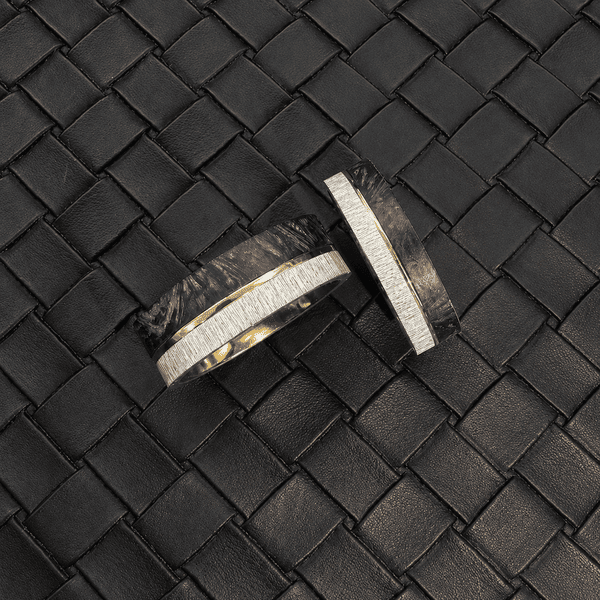
In the wedding band market, customers are increasingly looking beyond traditional precious metals. Titanium, tungsten, Damascus steel, black zirconium, ceramic, wood, meteorite, and carbon fiber have all become part of the alternative ring category. Among these materials, carbon fiber offers a distinctive combination of lightweight feel, technical appearance, and modern texture.
For jewelry brands, however, developing carbon fiber wedding bands requires more than choosing a black textured material. The supplier must understand material form, machining behavior, ring structure, metal integration, surface finishing, color consistency, comfort, and repeat production.
Carbon fiber wedding bands are not only a visual product. For brand customers, they are a complete development system involving material selection, forged carbon fiber color effects, metal structures, sampling, size control, and scalable OEM/ODM production.
Why Carbon Fiber Wedding Bands Are Gaining Attention
Carbon fiber wedding bands are attractive because they offer a different feeling from traditional gold, silver, platinum, or stainless steel rings. The material is lightweight, visually technical, and strongly associated with performance, engineering, motorsport, aerospace, and modern product design.
This makes carbon fiber especially suitable for men’s wedding bands, alternative metal ring collections, design-led jewelry brands, and customers who want something more distinctive than a conventional polished metal ring.
From a brand perspective, carbon fiber also creates strong collection potential. The same ring family can be developed with different metal inner rings, different carbon fiber structures, different widths, different surface finishes, and different color directions.
Forged Carbon Fiber vs Traditional Carbon Fiber Wedding Bands
Many carbon fiber wedding bands use woven carbon fiber, which has a regular textile-like pattern. This look is clean, recognizable, and technical. However, forged carbon fiber creates a very different visual language.
Forged carbon fiber has a random, marble-like pattern formed by chopped carbon fibers distributed throughout the material. Instead of a regular weave, the surface shows natural movement, depth, and variation. For jewelry brands, this creates a more premium, organic, and design-driven material effect.
This is why forged carbon fiber rings can be a stronger choice for brands that want a material identity beyond ordinary black carbon fiber inlays. Forged carbon fiber can be used as an outer ring body, an inlay, a sleeve, a decorative component, or part of a hybrid carbon fiber + metal structure.
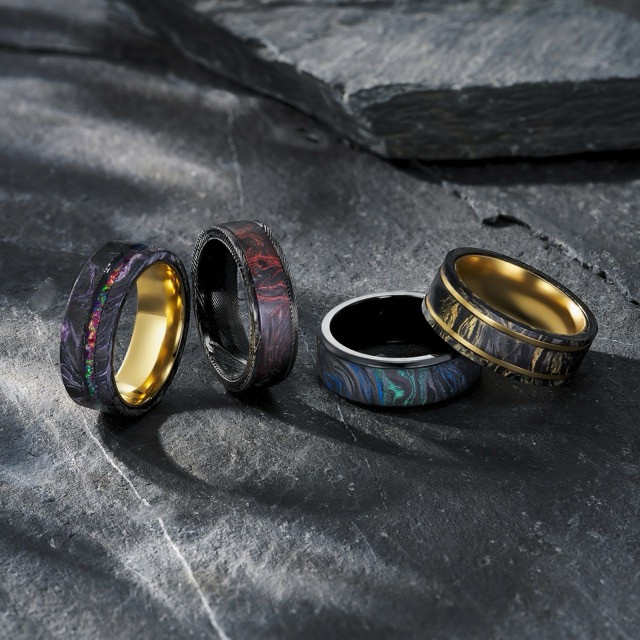
Ringentle also develops colored forged carbon fiber effects, allowing wedding band collections to move beyond black and dark grey into black-gold, deep green, red, rust red, silver grey, purple, blue, chromatic, and custom visual directions.
Popular Metal Combinations for Carbon Fiber Wedding Bands
Carbon fiber becomes more commercially flexible when combined with metal. The metal structure provides strength, comfort, weight, color contrast, and market positioning, while the carbon fiber adds texture, identity, and material differentiation.
Titanium + Carbon Fiber Wedding Bands
Titanium carbon fiber wedding bands are lightweight, modern, and comfortable. Titanium pairs well with forged carbon fiber because both materials have a technical and contemporary character. For brands targeting lightweight alternative wedding bands, titanium is one of the most practical metal directions.
Tungsten + Carbon Fiber Wedding Bands
Tungsten carbon fiber rings feel heavier and more substantial. Tungsten creates a strong, durable, and masculine product direction, while carbon fiber adds visual contrast and modern texture. This combination is especially suitable for brands focused on alternative metal wedding bands.
Damascus Steel + Carbon Fiber Wedding Bands
Damascus steel brings its own flowing metal pattern, which pairs naturally with forged carbon fiber’s random texture. This combination can create a strong layered visual language for wedding bands and limited-edition ring collections.
Stainless Steel, Gold, Silver and Other Metal Options
Stainless steel can support practical OEM/ODM production and PVD color options. Gold and silver can bring more premium value. Tantalum, cobalt, and other alternative metals can also be considered depending on the brand positioning, target price, and final product structure.
- Titanium: lightweight, technical, and comfortable.
- Tungsten: strong, heavy, and alternative-metal focused.
- Damascus steel: patterned, expressive, and distinctive.
- Stainless steel: practical for scalable production and PVD finishes.
- Gold and silver: suitable for higher-value jewelry programs.
- Tantalum and cobalt: strong options for rare-metal positioning.
Why Colored Forged Carbon Fiber Creates More Collection Possibilities
Traditional carbon fiber wedding bands are often limited to black or dark grey. This look is still important, but many brands need stronger visual differentiation. Colored forged carbon fiber gives jewelry brands a wider material language.
For example, a black-gold forged carbon fiber wedding band can feel luxurious and architectural. A deep green forged carbon fiber ring can feel more organic and unique. A red or rust-red carbon fiber effect can pair well with black titanium or Damascus steel. A silver grey carbon fiber effect can work well with titanium, tungsten, or white gold designs.
For a brand, this means one carbon fiber wedding band structure can become a full collection through color, metal, width, finish, and surface variation. This is especially valuable for brands that want to build a recognizable product family rather than one isolated ring design.
Key Production Factors for Jewelry Brands
A carbon fiber wedding band must look refined at close distance, feel comfortable on the hand, and remain stable during daily wear. For OEM/ODM jewelry development, several technical factors should be considered before production.
- Material form: rod, bar, plate, block, inlay, or custom component.
- Ring structure: full carbon body, carbon sleeve, metal core, or inlay design.
- Machining tolerance: size accuracy, edge stability, and repeatability.
- Metal integration: bonding, mechanical fit, surface alignment, and comfort.
- Color consistency: stable visual direction across samples and batches.
- Finishing: polishing, matte texture, PVD/IP options, and protective coating.
These details are difficult to control if the carbon fiber material supplier and the finished jewelry factory are completely separate. A vertical manufacturer can connect the material stage with the final jewelry structure from the beginning.
For brands that want to understand our material-to-product capability, Ringentle explains this approach in our article on vertical forged carbon fiber jewelry manufacturing.
OEM/ODM Development Path for Carbon Fiber Wedding Bands
For a jewelry brand, carbon fiber wedding band development should not begin with random samples. A clearer development path can reduce cost, avoid confusion, and help the brand move faster toward a real commercial collection.
- Define the target market: men’s wedding bands, alternative metal rings, premium collections, or custom brand programs.
- Choose the carbon fiber direction: woven carbon fiber, black forged carbon fiber, colored forged carbon fiber, metallic effects, or custom colors.
- Confirm the metal structure: titanium, tungsten, Damascus steel, stainless steel, tantalum, cobalt, gold, silver, or other materials.
- Develop focused samples with clear width, size, finish, comfort, and cost targets.
- Evaluate color, machining quality, edge finish, wear comfort, and production repeatability.
- Prepare the final design for scalable OEM/ODM production.
This process helps both the brand and the manufacturer build a collection with better clarity and fewer unnecessary sample rounds.
How Ringentle Supports Carbon Fiber Wedding Band Manufacturing
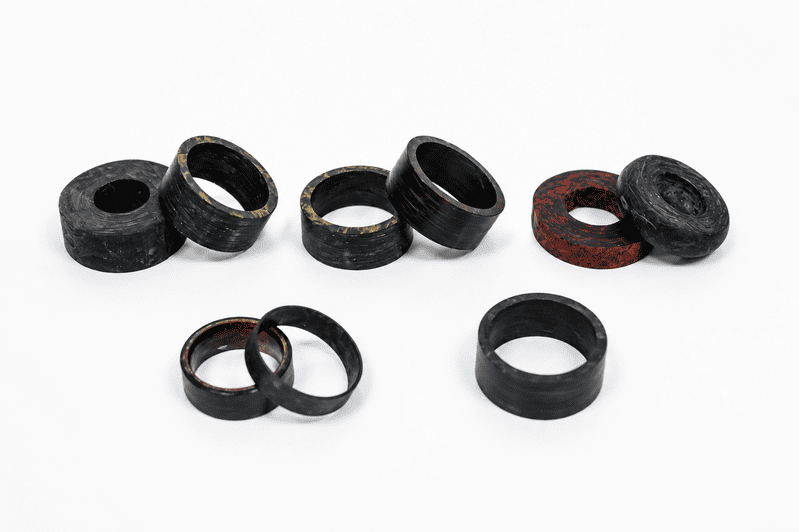
Ringentle supports jewelry brands with forged carbon fiber material development, colored carbon fiber effects, ring bars, carbon fiber + metal integration, sample making, and finished OEM/ODM jewelry production.
Our work covers both the material side and the finished product side. This means we can help brands evaluate carbon fiber forms, develop color systems, match metals, prepare samples, refine structures, and support repeat production.
Carbon fiber wedding bands can also be extended into a broader collection. The same forged carbon fiber color system can be used for pendants, dog tags, bracelets, necklaces, cufflinks, buttons, watch components, and custom jewelry parts.
Conclusion: Carbon Fiber Wedding Bands Can Become a Full Brand Collection
Carbon fiber wedding bands are not only a product trend. For jewelry brands, they can become a complete material-based collection system. By combining forged carbon fiber, colored material effects, titanium, tungsten, Damascus steel, stainless steel, gold, silver, and other metals, brands can create distinctive ring programs with strong visual identity.
The key is to develop the product with production reality in mind. Material form, color stability, machining accuracy, metal integration, comfort, finish, and repeatability all matter. This is why working with a vertical forged carbon fiber jewelry manufacturer can help brands move from concept to stable OEM/ODM production more efficiently.
Develop Carbon Fiber Wedding Bands with Ringentle
If your brand is planning carbon fiber wedding bands, forged carbon fiber rings, or alternative metal ring collections, Ringentle can support material development, color selection, metal integration, sampling, and scalable OEM/ODM production.
FAQ: Carbon Fiber Wedding Bands
Are carbon fiber wedding bands suitable for jewelry brands?
Yes. Carbon fiber wedding bands are suitable for jewelry brands, men’s wedding band companies, alternative metal ring brands, and OEM/ODM programs looking for lightweight, modern, and differentiated ring collections.
What is the difference between forged carbon fiber and traditional carbon fiber wedding bands?
Traditional carbon fiber often uses a woven pattern, while forged carbon fiber has a random, marble-like texture. Forged carbon fiber creates more organic movement, visual depth, and a more distinctive material identity.
Can carbon fiber wedding bands be combined with titanium or tungsten?
Yes. Carbon fiber wedding bands can be combined with titanium, tungsten, Damascus steel, stainless steel, tantalum, cobalt, gold, silver, and other jewelry metals depending on the target product structure and brand positioning.
Can colored forged carbon fiber be used for wedding bands?
Yes. Colored forged carbon fiber can be developed for wedding bands in black-gold, red, rust red, deep green, silver grey, purple, blue, chromatic, and custom visual effects. This gives brands more room to build distinctive collections.
Does Ringentle support OEM/ODM carbon fiber wedding band production?
Yes. Ringentle supports jewelry brands with forged carbon fiber material development, color systems, ring bars, metal integration, sample making, and scalable OEM/ODM production for carbon fiber wedding bands and alternative metal rings.